



Why Agra Is Becoming Uttar Pradesh's Rooftop Solar Success Story

- By Devendra Gupta, Co-Founder & CEO, Ecozen Solutions Pvt. Ltd.
When people talk about Agra, they usually think of history. But today, the city is quietly shaping the future of residential energy.
According to the official PM Surya Ghar: Muft Bijli Yojana data, 38,443 households in Agra have applied for rooftop solar, while 26,014 homes have already completed installations, making Agra one of Uttar Pradesh's leading districts in residential rooftop solar adoption.
At first glance, many would assume this growth is driven by generous subsidies or environmental awareness. In reality, it reflects something much more fundamental. People want greater control over their electricity.
For decades, electricity has been one of the few household expenses that families simply accepted. Every month, a bill arrived, and there was very little anyone could do except pay it. As homes became larger, air-conditioners became more common and electricity consumption increased, monthly energy costs also became less predictable.
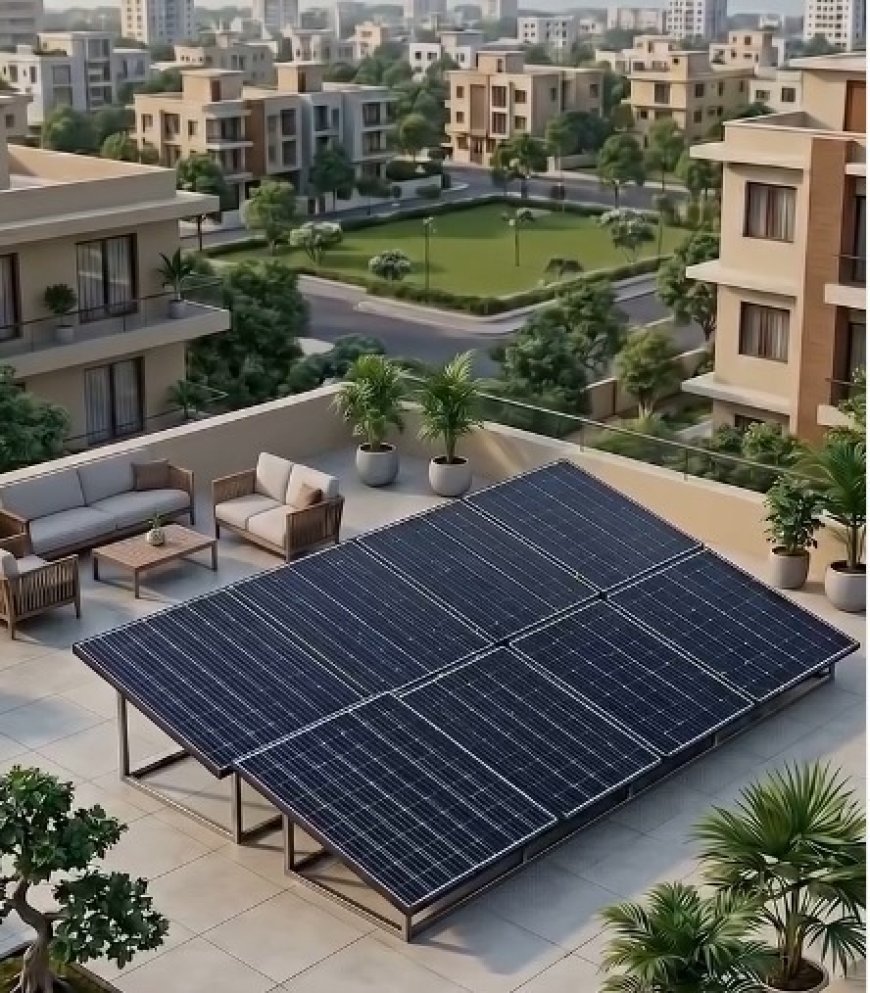
Homeowners began looking for a way to regain control. That is where rooftop solar changes the conversation. Instead of depending entirely on electricity purchased from the grid, families are now able to generate a significant portion of their own energy. More importantly, they gain greater visibility into how their electricity is produced and consumed. The conversation shifts from "How much will next month's bill be?" to "How much of my own electricity can I generate?"
That change in mindset is perhaps the biggest reason cities like Agra are moving ahead. Government initiatives like the PM Surya Ghar: Muft Bijli Yojana have certainly made rooftop solar more affordable. But affordability alone does not explain why tens of thousands of homeowners have already made the switch. Confidence does.
Confidence that rooftop solar has moved beyond being an emerging technology and has become a proven solution. Confidence built through neighbours who have already installed it, families who have experienced the savings firsthand and communities where rooftop solar is no longer viewed as an experiment, but as a practical home improvement.
A rooftop solar system is expected to remain on a home for more than twenty-five years. Yet many buying decisions are still driven almost entirely by the lowest quotation. That can be an expensive mistake.
The true value of a rooftop solar system is determined long after installation. Homeowners should look beyond the upfront price and ask a few important questions. Are the panels and inverters MNRE-compliant? Is there a written long-term warranty, or only verbal assurances? Will they be able to monitor their system's performance in real time and know that it is generating the energy they were promised? Is the installer an empanelled partner under PM Surya Ghar, capable of managing the subsidy process smoothly from application to disbursement? Most importantly, who will still be available to support the customer five or ten years from now?
These questions may not significantly change the installation experience on the first day. They can make all the difference over the next twenty-five years.
At Ecozen, we believe informed customers make better long-term decisions. Our responsibility extends beyond installing rooftop solar systems. Every installation begins with understanding a family's energy needs before recommending a solution. We use MNRE-compliant components, provide written long-term warranties, enable homeowners to monitor their systems through the Ecosphere platform in real time, and support customers through the entire PM Surya Ghar subsidy process as an empanelled partner. Our objective is not simply to install a solar system, but to ensure it continues delivering value for decades.
Agra's success offers an important lesson for the rest of the state. The future of rooftop solar will not be shaped by subsidies alone. It will be shaped by homeowners who want greater control over one of the most important recurring expenses in their lives—and who take the time to make informed decisions before making a twenty-five-year investment.
आपकी प्रतिक्रिया क्या है?











![Badruka School of Management Marks Milestone with Its First Convocation Ceremony 2026 in Hyderabad[KB1]](https://khabarindiya.com/uploads/images/202604/image_140x98_69e9aea67954c.jpg)